Project

See Reality

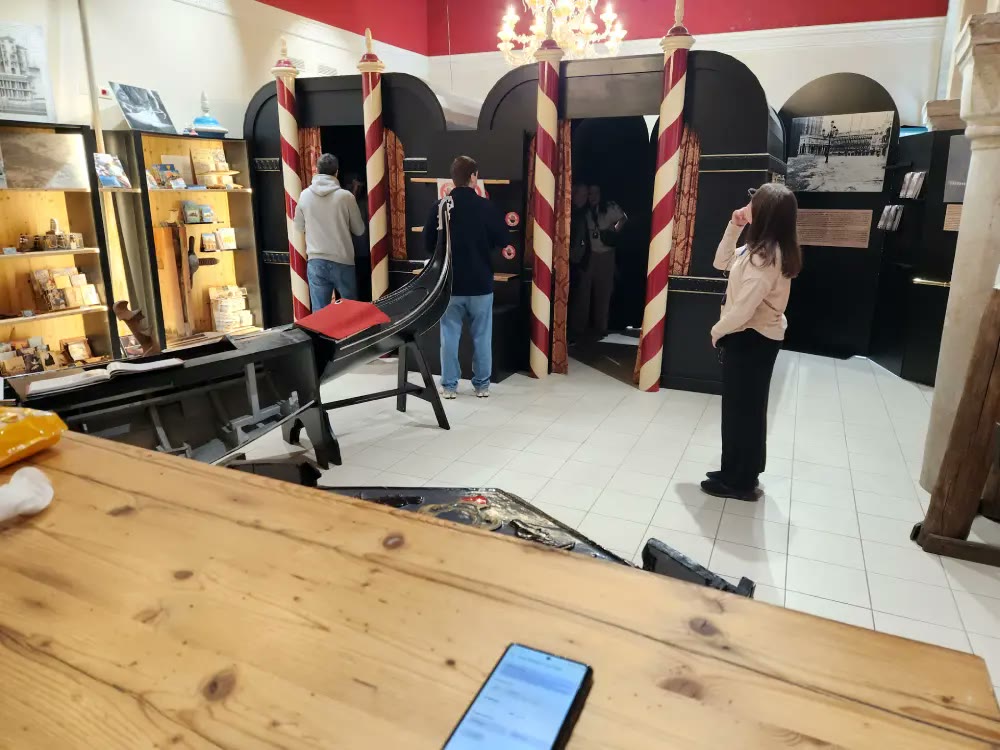
Hand-tracked mixed reality for people who have never worn a headset, running inside live guided tours — Boston, Lexington, Nashville, Atlantic Canada, Rome, Pompeii, Venice.

Professional XR · See Reality · Deployed internationally · 2024–Present XR & Spatial
Role
The most frequent committer on the studio’s Unity experiences, and the main developer on about a dozen of them · Aug 2024–present
Platform
Meta Quest mixed reality, tablets, mobile AR, lightweight AR glasses
Interaction
Hand-tracked physical interaction, ordered procedures, and onboarding for people who have never worn a headset — paced to a live guide
Status
Deployed on live tours, 2024–present · Venice multiplayer in development
Built with
Unity, C#, URP, Normcore

Overview

See Reality builds immersive experiences for tour operators, municipalities and historical attractions, and integrates them into tours those clients are already selling. I have been one of its developers since August 2024, and by the commit record the most frequent one on its Unity experiences — about 38% of the commits across them, and the main developer on around a dozen: the Boston Massacre and Five Shots at Midnight, the Bunker Hill cannon, Paul Revere’s Ride, both Lexington apps, Fort Nashborough, Ride Solar and its John Hamilton Gray encounter, the dinosaur and the dragon. Every experience below says what I built and who built the rest, because these are team builds and the credit should be legible.

None of it is a demo. These run on a schedule, in public, at a ticket price, operated by staff who did not build them, for families, children, older adults and people who have never worn a headset — often twenty at a time, outdoors, with pedestrians walking through the scene. The guide is not being replaced: the XR is one chapter of somebody else’s two-hour experience and has to hand the group back on time.

So the interaction problem is the same every time: take a historical place or procedure and turn it into something a stranger in a borrowed headset can do within a few minutes, with no tutorial, while the guide keeps talking. One gesture where one will do — reach for the thing. Ordered physical steps where the history is a procedure: the Bunker Hill cannon is loaded and fired by hand, in sequence, and does not fire if a step is skipped. Segments that end cleanly enough for a guide to pick the group back up.

Across several years that has covered room-scale mixed reality on Quest, mobile AR triggered from street signage, tablet content a guide holds up, cinematic 360° on lightweight AR glasses, hand-tracked physical interaction, historical reconstruction registered to real streets, five-language localisation, and — what I am building now — networked multiplayer in Normcore.

Everything I have worked on or contributed to is below, grouped and named, including the experiences whose final client I cannot confirm.

Deployments

Seven operators, six with a page of their own. Each one is a tour that was already selling tickets before any of this existed.

SeeSightTours — NiagaraXR

Niagara · Contributed to

An XR experience built around Niagara tourism, for a different operator and a site that behaves nothing like a city walking tour.

My part I created the project and built a boat-cannon sequence that rescues passengers by rope, with its dialogue, and the carnival games — darts, balloon pop and a hammer strength test.

Built mainly by other developers on the team.
Relive 1776

The five experiences on the Boston tour. The cannon is the one I point at in interviews, for reasons under it.

Bunker Hill Cannon

Mixed reality · Procedural interaction

It teaches a visitor to work a historical field gun by hand and in order — charge, ball, rammer, aim down the plaza, linstock, report — and it does not fire if a step is missed or taken out of sequence. A real procedure, decomposed into physical steps, wrapped in feedback that lets a stranger finish it unaided. That is the same problem as simulation-based training, minus the assessment, and it is the most transferable thing in this whole roster.

My part I wrote the sequencing: each tool checked in order, the next step highlighted, a reset, a historically accurate and a simplified version, and a ship target that sinks under fire. I adapted it for Ride Solar in Canada.

Cannon and tool models, the hand-interaction constraints, the interface and the effects by another developer on the team.

17th-Century Faneuil Hall Market

Mixed reality · Hand tracking

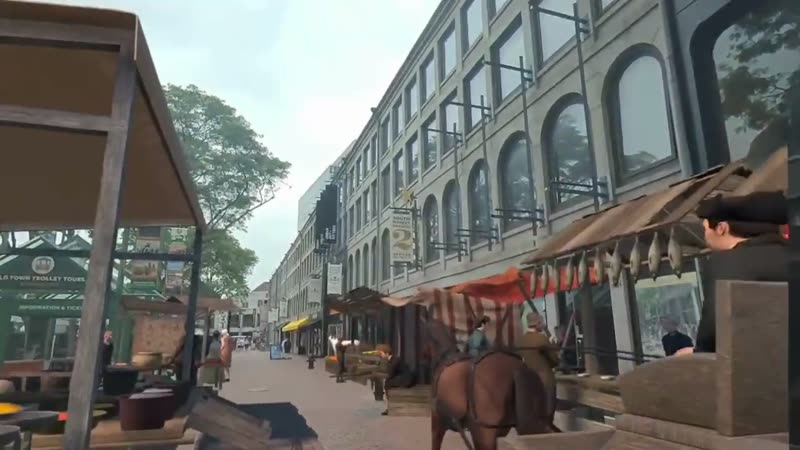
A reconstruction of the market that stood on the ground the group is standing on: stalls, traders and hanging goods laid over Quincy Market’s real colonnade. The interaction vocabulary is one gesture — reach for the thing — because nobody is teaching a control scheme to a first-time user in a public square.

My part Project and XR setup, character animation and dialogue, and the grab interactions; I later reused the market for Ride Solar and Lexington.

Stalls, traders, carriages and horse petting by other developers on the team.

Paul Revere’s Ride

Mixed reality

An immersive recreation of the ride, from inside it rather than watching it happen.

My part I created the project and built the NPC behaviour — colonists walking NavMesh waypoints with Animator-driven animation — the conversation scenes, and a mobile AR version.

Paul Revere and horse models, rigging and animation by another developer on the team.

Five Shots at Midnight

Mixed reality

The Boston Massacre, staged on the streets where it happened, with Crispus Attucks among the figures the visitor meets.

My part I built it from the Boston Massacre experience that was my first See Reality work in August 2024: the soldier and colonist behaviour, the captain who responds when touched, voice lines and dialogue, and a thumbs-up gesture menu.

Sons of Liberty

Mixed reality

Revolutionary-era Boston and the men organising in it, sited in the part of the city where that organising went on.

My part I converted it from mobile AR to Quest, with new tap, letter and letter-giving interactions.

Built by another developer on the team.

Additional experiences

Other See Reality work I have contributed to. Four of these have no deployment name I can confirm, so they are described without one rather than given an invented client.

360° for AR glasses

VITURE / XREAL hardware

A 360° immersive piece built against lightweight AR glasses rather than a headset. Glasses change the brief completely: no hand tracking, no room scale, and a visitor who can still see the guide the entire time.

My part I built the XREAL prototype that the glasses piece started from.

The VITURE app that shipped is another developer’s.

Temple of Artemis

Historical reconstruction

An immersive reconstruction of the temple, built from historical source material.

My part I built the first demo, with teleport spheres, in October 2025.

Developed further by other developers on the team.

Founding of Canada

Historical experience

An immersive historical experience centred on the founding of the country, which became Ride Solar’s John Hamilton Gray encounter.

My part I wrote its dialogue system: branching choices, idle body language between lines, random speaking animations and automated facial expressions, with lip-sync.

Models, lip-sync setup and voice lines by another developer on the team.

SpongeGuy

Internal name

An AR clip carried internally under that name: a Blender scene exported to GLB and USDZ with video textures.

My part Made with another developer on the team.

For younger visitors

Children are not a lesser version of this audience. A nine-year-old in a borrowed headset on a public street has no patience for onboarding, no fear of breaking anything, and an adult next to them who wants to see it work inside five seconds.

The Dragon

Mixed reality · Overhead scale

A dragon that passes through the real trees above the square and breathes fire, at a size that reads from the ground. The ceiling is the actual sky, which is a scale no screen gets to use.

My part I created the project and wrote the dragon’s behaviour and flight path.

Another developer on the team finished the interaction.

Kids Mini Cannon

Mixed reality · Procedural

A scaled-down version of the cannon experience for younger visitors.

Dancing Red Coat Soldiers

Mixed reality

British regulars, dancing — the children’s counterpart to the Revolutionary-era content the adult tour carries.

The Dino

Mixed reality

A dinosaur encounter built for younger visitors.

My part All of it: the dinosaur’s behaviour, a circling pterodactyl, sound and animation. It later went into the Ride Solar tour.

What the work involves

The through-line across all of it, and the part that transfers to XR training and simulation.

Somebody’s first ten minutes in a headset

The population these experiences serve has never used one, so the setup is part of the design rather than overhead around it: a guide kneeling to fit a headset onto a child is the first ten seconds of the experience, performed in public with a group waiting. Nothing may need explaining, nobody should be able to perform an interaction badly in front of strangers, and per-person onboarding time gets multiplied by twenty.

The hardware is a design decision

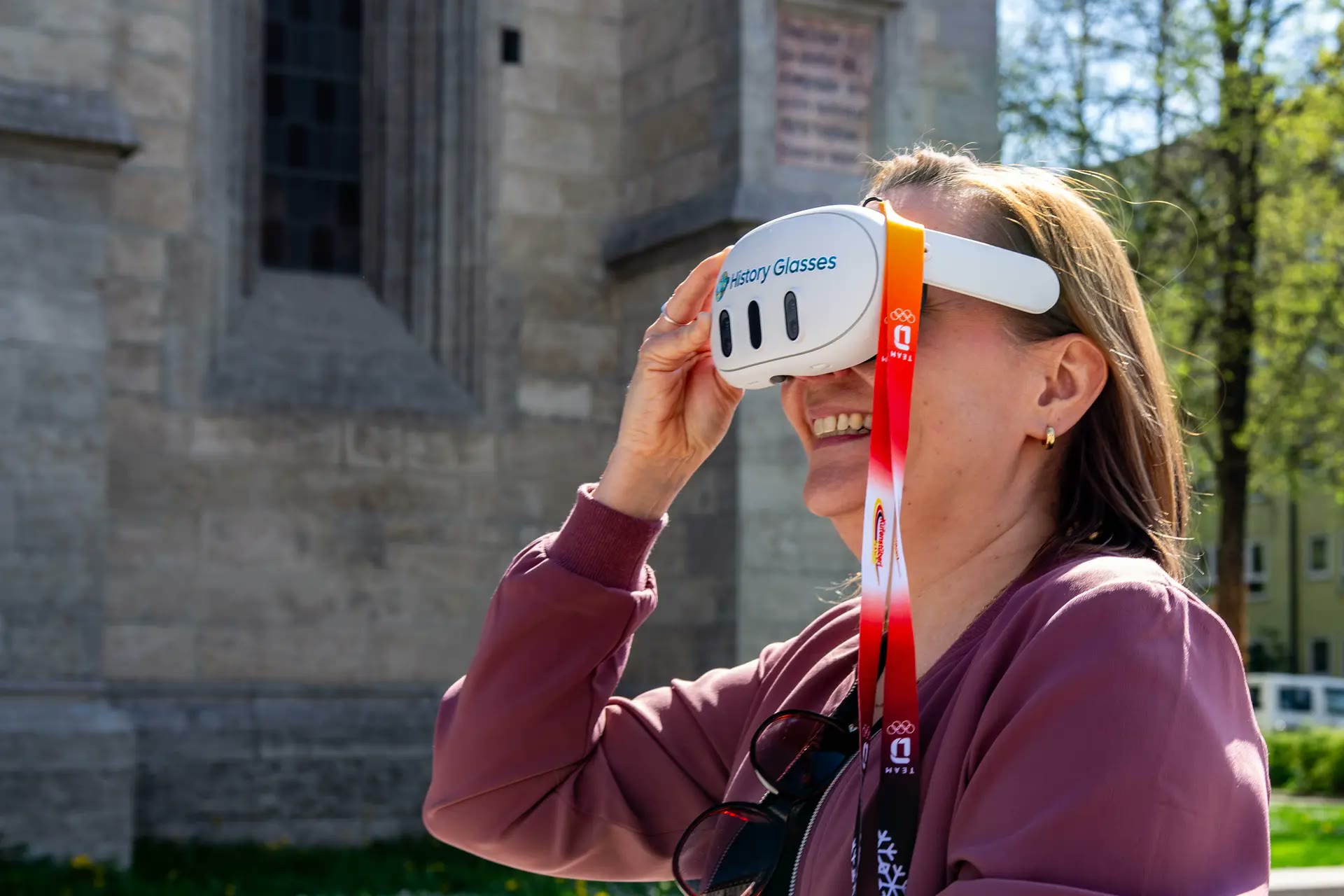
See Reality’s own answer is History Glasses: roughly 400 g, held up to the eyes like binoculars rather than strapped on, so a visitor never loses sight of the guide, the group or the street. One hardware choice carries the entire argument about what XR is for on a tour — it is a chapter of someone else’s experience, not a replacement for it.

Hands, not controllers

Hand tracking here is an operational choice before it is an elegant one. There is no controller to hand over, explain, drop, or lose between groups, and a visitor’s own hand reaching into the scene needs no tutorial. The cost is that tracking has to hold up outdoors, in daylight, over a full day of use.

Registered to a real place — still

Registered to a real place

Location-based XR lives or dies on alignment. The market has to run the length of a colonnade that is still standing; the cannon has to sit on the plaza’s bricks. Get it wrong and the effect does not degrade politely — it stops being the place and becomes a screensaver.

Standing inside a building that is gone

Reconstruction is the other half of the same idea: a visitor stands on the ground a building occupied and then stands inside it. It puts the design work in the source material — what the building actually was — and in making a complicated historical space legible at a glance to someone who has thirty seconds.

Inside a working operation

The visitors around that gladiator fight are the tour, not a test audience. Everything here has to survive a schedule: staff who did not build it, groups back to back, mixed hardware, no reliable network, devices charged and cleaned and accounted for, and recovery a guide can perform in fifteen seconds in front of a paying group.

Reliability as a design property

The standard I took from this work and now apply everywhere: a build is not finished when it demonstrates well. It is finished when somebody who did not write it can run it twelve times a day without me. That covers performance on standalone hardware, URP pipelines tuned for passthrough, and behaving the same across a fleet that is not on identical firmware.

A recenter that survives a public street

Visitors are every height, and a borrowed headset on a moving tour loses its bearings. I built a height-adjustment and palm-gesture recenter — a visitor makes the gesture and the scene puts itself back in front of them at the right height — and it became part of the studio’s project template, used across Lexington, Nashville, Ride Solar and the newer tours.

Multiplayer, in development

The Venice racing work is the first networked thing I have built here: several participants in one shared scene in Normcore, with spawning and ownership, a lobby and ready-up, a countdown, placements and a finish, and an offline fallback for a tour with no network. It is on a feature branch, not merged. It is the same step a training experience takes when it stops being one trainee at a station and becomes a team running a procedure together.

Where this points

See Reality is a tourism and location-based entertainment studio — not an industrial training company, and nothing here certifies anyone in anything. What transfers is the method: translate a real process into an ordered interactive sequence, teach the action physically, guide a novice with no mental model, give feedback in the moment, and fit the whole thing inside a workflow somebody else owns. I have done that repeatedly, for paying strangers, in several countries.

Next